Transformer Models - Notes
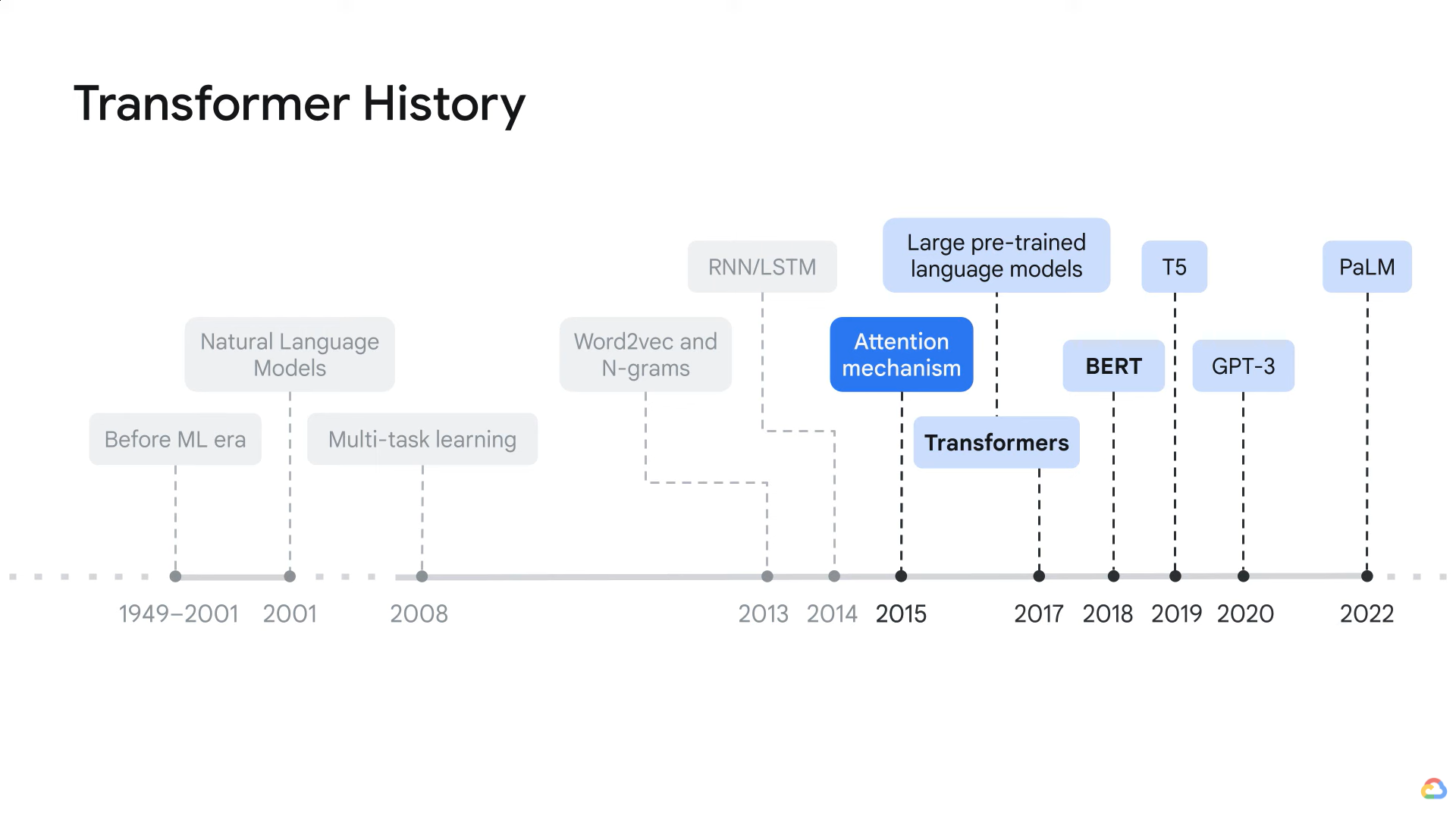
Source: Link
Table of Contents (ToC)
Introduction
The Transformer model is a deep learning architecture that has revolutionized natural language processing (NLP) and other AI fields.
What's the Transformer Model?
- Introduced in the paper "Attention is All You Need" (2017).
- Utilizes a self-attention mechanism to weigh the importance of different input tokens.
- Designed to handle sequential data but can process all input simultaneously.
Key Concepts and Terminology
- Attention Mechanism: Focuses on relevant parts of the input data.
- Encoder-Decoder Architecture: Standard setup for many transformer, used for tasks like translation.
- Self-Attention: Enables the model to weigh the importance of each part of the input relative to every other part.
- Positional Encoding: Adds information about the position of tokens in the sequence.
Applications
- Natural Language Processing (NLP): Machine translation, text summarization, sentiment analysis.
- Vision Transformers: Image classification and object detection.
- Speech Recognition: Enhanced performance in automatic speech recognition tasks.
- Generative Models: Used in models like GPT for text generation.
Fundamentals
Transformer Architecture Pipeline
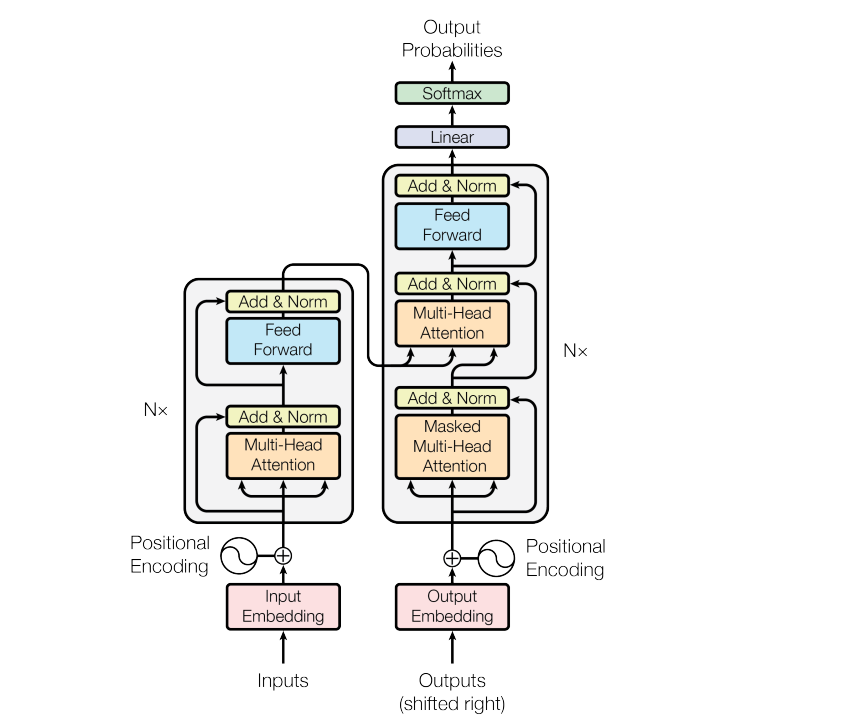
- Input Embedding: Converts tokens into dense vectors.
- Positional Encoding: Adds sequence information to embeddings.
- Multi-Head Attention: Computes attention in multiple subspaces.
- Feed-Forward Network: Applies dense layers with activation functions.
- Output: Transformed data used for various tasks like classification or generation.
How the Transformer Models Work
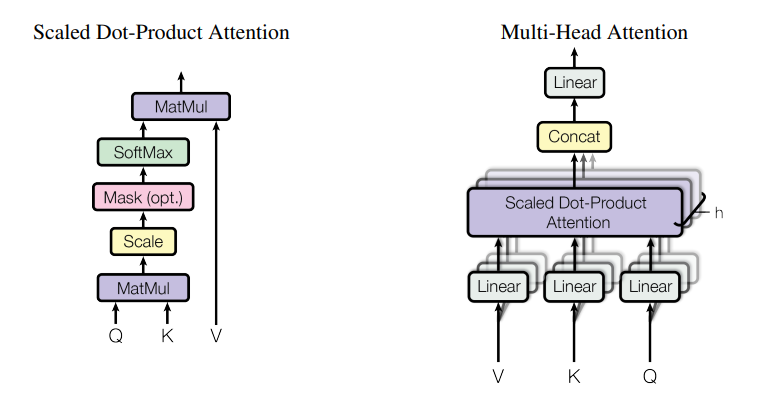
- Input Representation: Converts words/tokens into vector embeddings.
- Self-Attention Calculation: Measures relationships between tokens in the input.
- Stacking Layers: Multiple layers of self-attention and feed-forward networks.
- Output Generation: Final output depends on the specific task (e.g., translation, classification).
Types of Transformer Models
- BERT (Bidirectional Encoder Representations from Transformer): Pre-trained model for NLP tasks.
- GPT (Generative Pre-trained Transformer): Focused on text generation.
- T5 (Text-To-Text Transfer Transformer): Converts all NLP tasks into a text-to-text format.
- Vision Transformers (ViT): Adaptation for image classification.
Some Hands-On Examples
- Text Classification: Fine-tuning BERT for sentiment analysis.
- Text Generation: Using GPT for generating coherent paragraphs.
- Image Classification: Implementing Vision Transformers for image datasets.
Tools & Frameworks
- Hugging Face Transformers: Popular library for using pre-trained transformer models.
- TensorFlow & PyTorch: Frameworks supporting the implementation of transformer.
- Transformers-Interpret: Library for model interpretability in transformer.
- AllenNLP: Toolkit for building and evaluating transformer models.
Hello World!
from transformers import pipeline

# Load pre-trained model and tokenizer
classifier = pipeline("sentiment-analysis")

# Example usage
result = classifier("Transformer models are amazing!")
print(result)
Lab: Zero to Hero Projects
- Text Summarization Tool: Build an app that summarizes articles.
- Chatbot Using GPT: Create an interactive chatbot.
- Image Classification with ViT: Train a Vision Transformer on a custom image dataset.
- Custom Sentiment Analysis: Fine-tune BERT on your own sentiment dataset.
References
Documentation: - HuggingFace Transformers Framework
Papers: - Vaswani, A., et al. (2017). "Attention Is All You Need." - Devlin, J., et al. (2018). "BERT: Pre-training of Deep Bidirectional Transformers for Language Understanding." - Radford, A., et al. (2019). "Language Models are Unsupervised Multitask Learners." - Dosovitskiy, A., et al. (2020). "An Image is Worth 16x16 Words: Transformers for Image Recognition at Scale."